
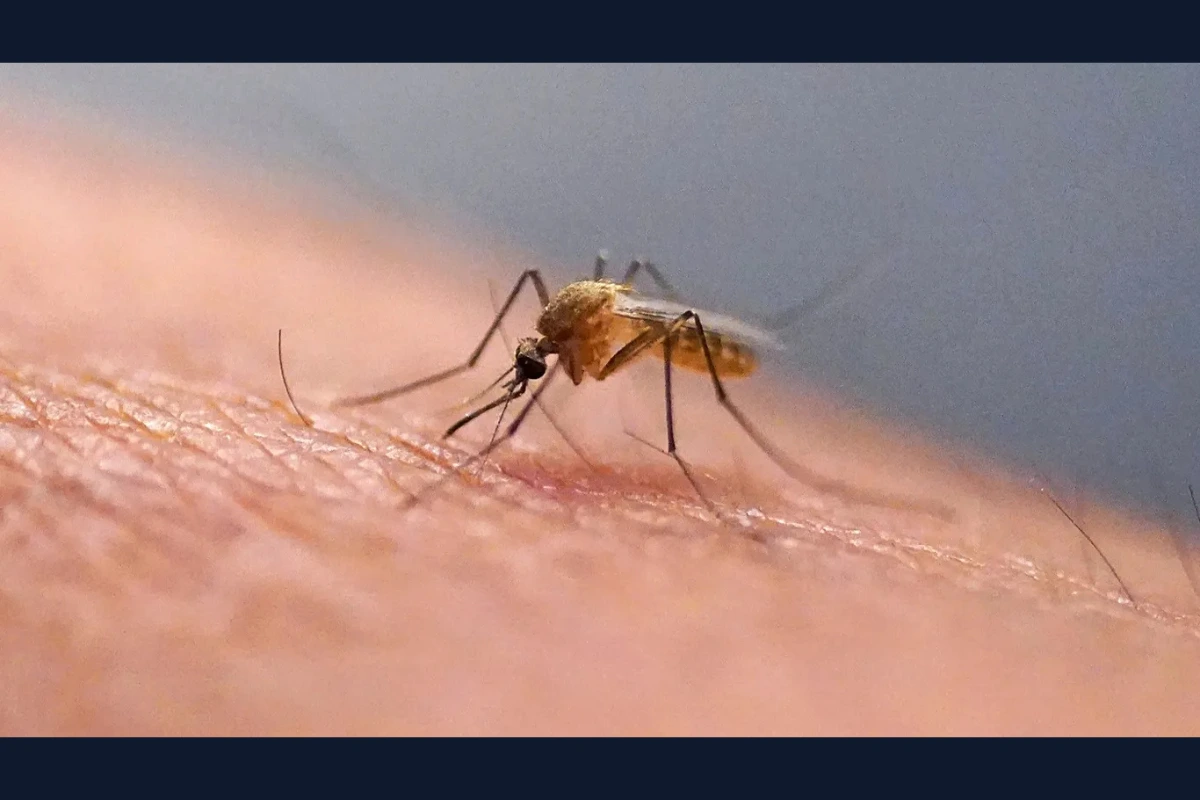
Iceland — once considered one of the last mosquito-free places on Earth — has officially lost that status. Scientists have confirmed the first-ever discovery of mosquitoes on Icelandic soil, raising new concerns about how global warming is reshaping even the most remote environments on the planet.
Until recently, the island’s frigid climate and lack of stagnant water made it impossible for mosquitoes to survive or reproduce. Only Antarctica now remains a completely mosquito-free region.
Climate Change Melts Barriers Once Thought Impenetrable
Experts say the sudden appearance of mosquitoes in Iceland is no coincidence. Over the past decade, the country has been warming at a rate four times faster than the rest of the Northern Hemisphere. This rapid change has caused glaciers to melt, lakes to expand, and summer temperatures to reach unprecedented highs.
In May 2025, Iceland experienced its hottest day on record — 26.6°C, with spring temperatures hovering nearly 10°C above normal in several regions. These warmer conditions, combined with newly formed pools of stagnant meltwater, have created a rare opportunity for mosquitoes to breed and survive through the short Icelandic summer.
Discovery Near Reykjavik Sparks Scientific Attention
The breakthrough came when Bjorn Hjatason, a local insect enthusiast, spotted what he initially described as an unfamiliar fly while conducting moth observations using wine-soaked ropes in the Kjós glacial valley, just north of Reykjavik.
Curious, he collected three specimens and shared his findings online, where local researchers quickly took interest. The insects were later examined at the Natural Science Institute of Iceland, where entomologist Matthías Alfreðsson identified them as Culiseta annulata — a mosquito species known for its resilience in cold climates such as Siberia and parts of northern Europe.
According to Alfreðsson, this species is remarkably hardy and can seek refuge indoors — in barns or other sheltered spaces — to survive freezing temperatures. That ability could allow mosquitoes to establish themselves in Iceland if environmental conditions remain favorable.
A Warning Sign of Global Climate Shifts
While scientists have not conclusively linked the discovery to climate change alone, most agree that warming weather patterns are significantly increasing the odds of new insect species adapting to Iceland’s evolving ecosystem.
Alfreðsson noted that other mosquitoes might also arrive through human transport routes, such as cargo ships or airplanes. In fact, a mosquito was once found aboard a flight that landed at Keflavík International Airport, though it never survived in the wild — until now, that is.
“This could be the beginning of a new chapter in Iceland’s natural history,” said Alfreðsson. “If these mosquitoes manage to reproduce here, it would confirm that our climate is warming enough to support species that were once unable to live in our environment.”
Also read: 7 DIY Hair Packs for Long, Strong & Shiny Hair Naturally
What Happens Next?
Scientists and environmental agencies in Iceland are now working to determine whether the mosquitoes can sustain a breeding population or if this was an isolated event. Ongoing monitoring in wetlands and urban areas will help researchers understand whether this marks the start of a long-term ecological change.
If confirmed, the finding would serve as yet another powerful reminder of climate change’s far-reaching effects — proving that no corner of the world, not even Iceland, is untouched by global warming.